The Complete Guide to Running Apps: Find the One That Actually Works for You
KorMarathon EditorsPublished
In an age where you can carry a professional coach in your pocket, why are so many runners still going it alone?
A running app is far more than a stopwatch with GPS. The right one can double your training efficiency, lower your injury risk, and provide the kind of steady motivation that's nearly impossible to sustain on your own. The wrong one—meaning an app mismatched to your actual goals—can just as easily pile on confusion rather than data.
This guide takes a close look at the running apps most widely used by runners today. But before comparing them, let's start with the most important question: What do I actually need right now?
Why Running Apps Actually Work: The Science Behind It
Running apps are effective at building habits for reasons that go well beyond tracking convenience. Three distinct mechanisms—each backed by psychology and behavioral science—work together to keep you lacing up.
Social Facilitation: The well-established psychological phenomenon that simply knowing others are watching improves performance applies directly to running apps. Posting a run and receiving reactions from friends recreates this effect in a digital context. Even when running alone, that sense of being seen is often enough to hold your pace.
Gamification and Dopamine: Earning badges, leveling up, and completing challenges all stimulate the brain's reward circuitry. Nike Run Club's streak badges are a perfect example. Once you hit three weeks in a row, the pull toward four weeks—and then five—kicks in almost automatically. That chain of small wins is what ultimately builds a durable running habit.
Data-Driven Load Management: Automatic weekly mileage tracking via GPS helps you regulate your training volume. As outlined in our Beginner's Marathon Guide, the "10% Rule"—never increasing total weekly distance by more than 10% at a time—is exactly the kind of guardrail a good running app can enforce on your behalf.
What to Know Before Choosing a Running App
Before diving into comparisons, it helps to categorize what running apps actually offer. Most features fall into one of three buckets—knowing which one matters most to you makes the choice much simpler.
| Feature Type | What It Does | Best For |
|---|---|---|
| Tracking & Recording | GPS-based distance, pace, and heart rate monitoring | All levels |
| Training Plans & Coaching | AI or expert-designed personalized training schedules | Intermediate and above |
| Community & Social | Sharing activities with friends, joining challenges | Runners who need external motivation |
If you're just getting started, a lightweight, intuitive tracking app is the right entry point. As your base fitness builds, migrating to an app with structured training plans is a natural next step.
In-Depth Comparison of the Top Running Apps
1. Nike Run Club (NRC) — The Most Popular Running App Around
Bottom line: If you want the most complete free coaching experience available without spending a cent, NRC is the answer.
Nike Run Club is one of the most widely used running apps in the world, and it has developed a particularly loyal following among runners in their 20s and 30s. Its core strength is remarkable: a genuinely comprehensive coaching plan at no cost. A recent survey found that roughly 57% of running app users use NRC as their primary app—nearly double the share of Strava, which came in second at around 30%.
Key Features
- Guided Runs: Nike coaches and athletes lead audio-guided runs across more than 300 free sessions, covering intervals, long slow distance, recovery runs, and more.
- Level Up & Badge System: Cumulative mileage earns you progressively higher tiers—Yellow → Orange → Green → Blue → Purple → Black → Volt. The streak badge system, awarded for consecutive weekly and monthly completions, creates a powerful motivational loop: once you've built a streak, breaking it feels worse than going for another run.
- Custom Training Plans: Enter your goal race and current fitness level, and NRC generates a week-by-week training schedule automatically. Plans cover everything from 5K introduction to full marathon completion.
Recommended for: First-time runners, anyone wanting free access to structured coaching, runners who are motivated by social sharing and community recognition.
2. Strava — The Social Network for Runners (The World's Leading Platform)
Bottom line: For data-driven runners and those who thrive in community, Strava remains the gold standard. Just be aware of how to access it in your region.
Strava has evolved well beyond a running app into something closer to a dedicated social media platform for endurance athletes. While Strava pulled its local entity from the Korean market a few years ago, the app itself remains fully functional. It no longer appears in the domestic App Store or Google Play, so most users access it by switching to a foreign account to download it.
If you use Strava, connecting it to the My NB app (covered below) is something we strongly recommend—details in that section.
Key Features
- Segments: Strava automatically compares your time on any defined route segment—say, a stretch along the Han River—against your own personal records and the leaderboard of every runner who has ever tackled that segment. The ability to claim the top spot (the "KOM" or "QOM") turns every run into something of a game.
- Training Load & Fitness Chart: A visual dashboard tracking your fitness, fatigue, and form across three metrics, helping you see whether your training is actually building you up or grinding you down. Available on paid plans.
- Clubs: Create or join groups with running crews, coworkers, or friends, and share weekly mileage rankings with each other.
Pricing: The free tier covers tracking and recording adequately, but segment leaderboards, heart rate analysis, and training load features require a subscription.
Drawbacks
- The free plan's limitations have tightened over time; meaningful use increasingly requires a paid subscription.
Recommended for: Intermediate to advanced runners who enjoy analyzing training data, runners active in clubs or crews, smartwatch users (Garmin, Apple Watch, etc.).
3. Garmin Connect — The Pinnacle of Data Analysis
Bottom line: If you own a Garmin watch, this isn't optional—it's essential.
Garmin Connect pairs with Garmin's line of GPS smartwatches, and while it technically functions as a standalone smartphone app, it reveals its true power when used alongside Garmin hardware.
Key Features
- VO2 Max Estimation: Your Garmin watch analyzes heart rate and pace data to estimate maximum oxygen uptake—one of the most reliable indicators of cardiovascular fitness—and tracks how it changes over time in response to training.
- Training Status: Automatically classifies your current training as maintaining, building, or approaching overreach, giving you an objective read on your progression.
- Training Readiness: Combines sleep quality, heart rate variability, and accumulated training load to produce a daily readiness score—essentially telling you whether today is a good day to push hard or back off.
- Race Time Predictor: Calculates estimated finish times for 5K, 10K, half marathon, and full marathon based on your current fitness level.
- Course Navigation: Save popular routes and follow turn-by-turn navigation directly on your watch display.
GPS Accuracy: Garmin models with multi-band GNSS support deliver exceptional location accuracy, even in dense urban environments or under heavy tree cover.
Drawbacks
- The app itself is free, but getting real value out of it requires a Garmin watch (roughly $250–$900 USD depending on model).
- The UI prioritizes information density over simplicity, which can feel overwhelming for new users.
- Community and social features are considerably thinner than Strava's.
Recommended for: Current Garmin watch owners, runners who want to train using physiological data (VO2 Max, HRV, sleep analysis).
4. Adidas Running (formerly Runtastic) — A Multi-Sport App That Rewards Every Mile
Bottom line: Structured training plans combined with adiClub loyalty perks—if you're an Adidas fan, this one's a must-have.
Built on the foundation of Runtastic, which Adidas acquired, this app is less well known than NRC or Strava in many markets—but it has a genuinely strong case in two specific areas: structured training and brand reward integration. It's also far more than a running app: with support for over 100 sports activities in a single platform, it functions as a comprehensive fitness tracker for multi-sport athletes.
Key Features
- adiClub Points: Every workout—running included—converts into Adidas membership (adiClub) points. Points accumulate to unlock higher membership tiers, which come with purchase discounts, early access to product drops, and other brand benefits. The connection between physical activity and brand ecosystem is more direct here than in most competitor apps.
- 100+ Sports Tracking: Beyond running, the app logs cycling, hiking, swimming, and more than 100 other activities, all in one place. Particularly useful for runners who cross-train in multiple disciplines.
- Story Running: Audio-based running content where you listen to a short story or adventure narrative while you run. Similar to NRC's guided runs in format, but framed more like entertainment—the story unfolds as you move.
- Training Plans: Detailed week-by-week training plans built around target finish times, with clearly differentiated easy runs, intervals, and long runs.
- Music Integration: Curated playlists matched to your running vibe, with direct integration for Spotify, Apple Music, and other streaming services.
Device & Platform Compatibility
Compatible with major smartwatch brands including Garmin, Apple Watch, Coros, and Suunto—no complex setup required.
Drawbacks
- Training plans and most analytical features are locked behind a premium subscription.
- Community features are weaker than Strava's.
Recommended for: Adidas gear enthusiasts who want to earn rewards while running, runners seeking structured training plans, multi-sport athletes, those looking for an alternative to NRC.
5. Runday — The Korean Running App That Gets It Right
Bottom line: For runners who want coaching in natural, fluent Korean—especially absolute beginners—Runday is the standout choice.
Runday is a domestically developed running app with a strong following in the beginner community. The team built it after experiencing firsthand just how lost new runners feel at the start, so everything about it is designed around helping ordinary people improve their fitness from zero. Its training programs were developed with input from a former national-team marathoner.
Key Features
- 30-Minute Running Challenge: Runday's flagship program. It begins with "run 1 minute, walk 2 minutes" intervals and progressively shifts the ratio over eight weeks until you can run for 30 minutes continuously without stopping. It's a clean application of interval training science, and it works equally well for runners returning from injury or a long break.
- Full Korean Voice Coaching: Natural, conversational Korean coaching guides you from warm-up through cool-down. Instructions like "run at a pace where you can still hold a conversation" land intuitively in a way that foreign apps with Korean text-to-speech simply don't match.
- Praise System: Every run ends with acknowledgment of your effort—regardless of distance or speed. It sounds small, but for adults who rarely hear "well done" after leaving school, this kind of positive reinforcement consistently drives runners to come back for more.
- Community: A Korean-language running community where members share their daily runs and cheer each other on with real-time reaction features.
Drawbacks
- No access to a global running community—the app is focused entirely on Korean-language users.
- Does not offer advanced physiological analytics like VO2 Max estimation.
Recommended for: True beginners just starting their first running program, runners who find English-language apps uncomfortable, runners returning from injury, those who want to engage with a Korean-speaking running community.
6. Runkeeper — ASICS's Global Standard for Goal-Driven Runners
Bottom line: For goal setting and structured training plans, Runkeeper sits comfortably among the global top tier.
Operated by ASICS, Runkeeper has accumulated over 50 million users worldwide. It's less visible than NRC or Strava in the Korean market, but among international runners it maintains a loyal user base built on a reputation for tracking accuracy and goal-oriented coaching.
Key Features
- Goal-Based Training Plans: Select your objective—weight loss, running from scratch, general fitness—and the app delivers a phased plan from 5K to marathon. Upgrading to Runkeeper Go enables deeper personalization.
- Audio Cues: Distance, pace, and elapsed time announced by voice at customizable intervals, so you never need to glance at your screen mid-run.
- Shoe Tracker: Logs cumulative mileage per pair of shoes and notifies you when it's time to replace them—similar to Strava's equivalent feature.
- Spotify & Apple Music Integration: Direct music streaming integration is available on premium plans.
- Monthly Community Challenges: Join goal-sharing challenges with runners worldwide.
Pricing: Core features are free. A paid plan unlocks personalized training plans, guided workouts, and deeper analytics.
Drawbacks
- Community features remain less developed than Strava's.
Recommended for: Runners who prioritize goal setting and structured plans, ASICS shoe wearers, anyone looking for a capable global app beyond Strava.
7. My NB (My New Balance) — Rewards That Stack Up With Every Mile
Bottom line: If you regularly buy New Balance gear, this app turns the miles you log into real purchase benefits.
My New Balance (My NB) is New Balance's official free membership app. More than a standard points program, it ties your actual running activity directly to brand rewards. It's not a GPS tracking app in its own right—but by connecting your Strava account, you automatically earn 100 points per kilometer logged on Strava, which can then be redeemed against New Balance purchases.
Key Features
- Running Distance to Points: Once linked to Strava, every kilometer you record there converts to points automatically—no manual entry required. The more consistently you run, the faster points accumulate. Note that the cap is 100 km per month (10,000 points).
- Daily Check-In & Share Bonuses: Earning points doesn't require running every day. Checking in to the app daily or sharing a run to Instagram also earns points, so rest days don't have to be zero-reward days.
- Coupon Exchange: Accumulated points can be redeemed for product coupons (discounts on New Balance items) or activity coupons (entry into running events and similar experiences).
Drawbacks
- No GPS tracking or run recording of any kind—a separate running app (Strava being the obvious choice) is required.
- The value is tied entirely to the New Balance ecosystem, so runners with no interest in the brand will find limited use for it.
Recommended for: Regular New Balance shoe and apparel buyers, existing Strava users, runners who want to convert logged mileage into tangible purchase savings.
Quick-Reference: Which App for Which Goal?
| Goal | First Pick | Second Pick |
|---|---|---|
| Starting running for the first time | Runday | Nike Run Club |
| Free coaching + social sharing | Nike Run Club | Runday |
| Deep training data analysis | Garmin Connect | Strava |
| Coaching in Korean | Runday | — |
| Structured training plans | Garmin Connect | Runkeeper |
| Tracking multiple sports in one place | Strava | Adidas Running |
| Earning gear purchase benefits | My NB (via Strava) | Adidas Running |
3 Tips to Get the Most Out of Your Running App
Tip 1: Build Your Own App Stack
No single app does everything perfectly. That's why many experienced runners use Garmin Connect, Strava, and NRC simultaneously. A natural progression for a new runner might look like this: start with Runday for coaching and NRC for social sharing, then add Garmin when you invest in a GPS watch. If you're already a Strava user, connecting My NB takes five minutes and passively earns you rewards with no extra effort.
The key to making this work without friction: lean into cross-app sync. Record a run on your Garmin watch—data flows automatically to Garmin Connect, and with a simple integration, directly to Strava as well. With My NB also linked to Strava, points accumulate behind the scenes without any manual action on your part.
Tip 2: Track Your Shoe Mileage Through Your App
Running shoes need replacing after 500–800 km. The cushioning in the midsole compresses gradually over time, and by the time you notice any visible wear, the protective foam has already degraded significantly. Most major running apps let you assign shoes to your activities and track cumulative mileage per pair automatically. Replacing shoes when the data tells you to—rather than when they look worn—is one of the most cost-effective injury prevention strategies available.
Tip 3: Use Pace Alerts on Every Run
One of the most consistent mistakes among newer runners is going out too fast. Nearly every major running app lets you set a target pace range and alerts you—via vibration or audio—the moment you drift outside it. Turn this feature on not just for race day but for everyday training runs as well. Training consistently within your intended zones does more for long-term development than any individual hard effort, and the alert is what keeps honest pacing from slipping.
Where Running Apps Are Headed: The Rise of Personalized Coaching
The most significant shift in running apps right now is the move toward individualized coaching. Where traditional training plans used only distance and time as variables, the current generation of apps incorporates sleep quality, heart rate variability, and stress metrics to recommend the right training intensity for today specifically—not just a generic schedule.
Garmin's Daily Suggested Workout feature is leading this direction, offering dynamically adjusted training recommendations based on real-time physiological data. The broader trend is clear: running apps are evolving from passive logbooks into active, adaptive coaching systems—closer to a personal trainer than a spreadsheet.
Choosing and consistently using the right running app can have a more meaningful impact on your training outcomes than buying expensive new shoes. Pick one from this list today, go for a run, and see what changes.
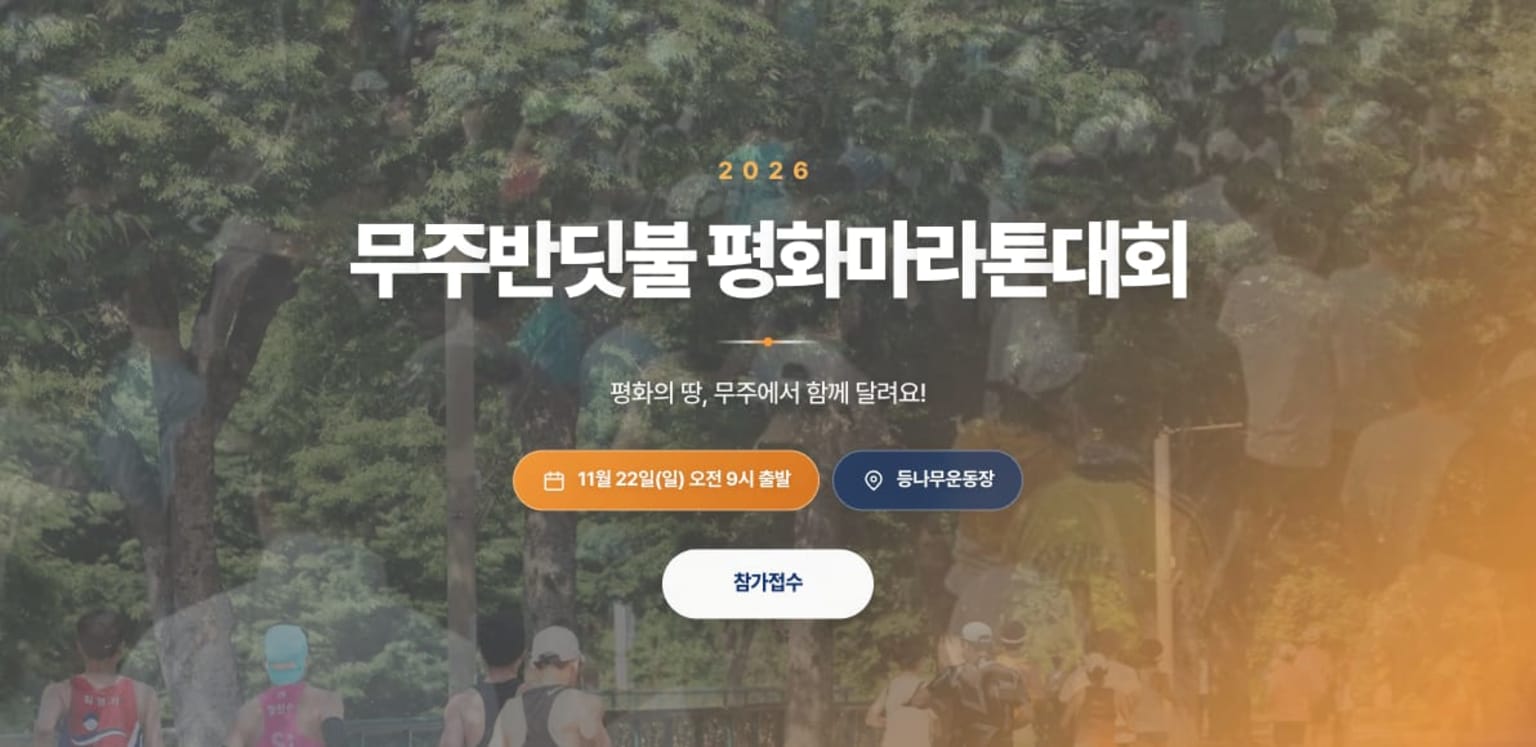
Looking for your next race? Find events open for registration at KorMarathon. When you have a goal race on the calendar, your app stops being a tracker and starts being a coach.