2026 JTBC Seoul Marathon Registration Opens: What's Changed and What Runners Think
KorMarathon EditorsPublished
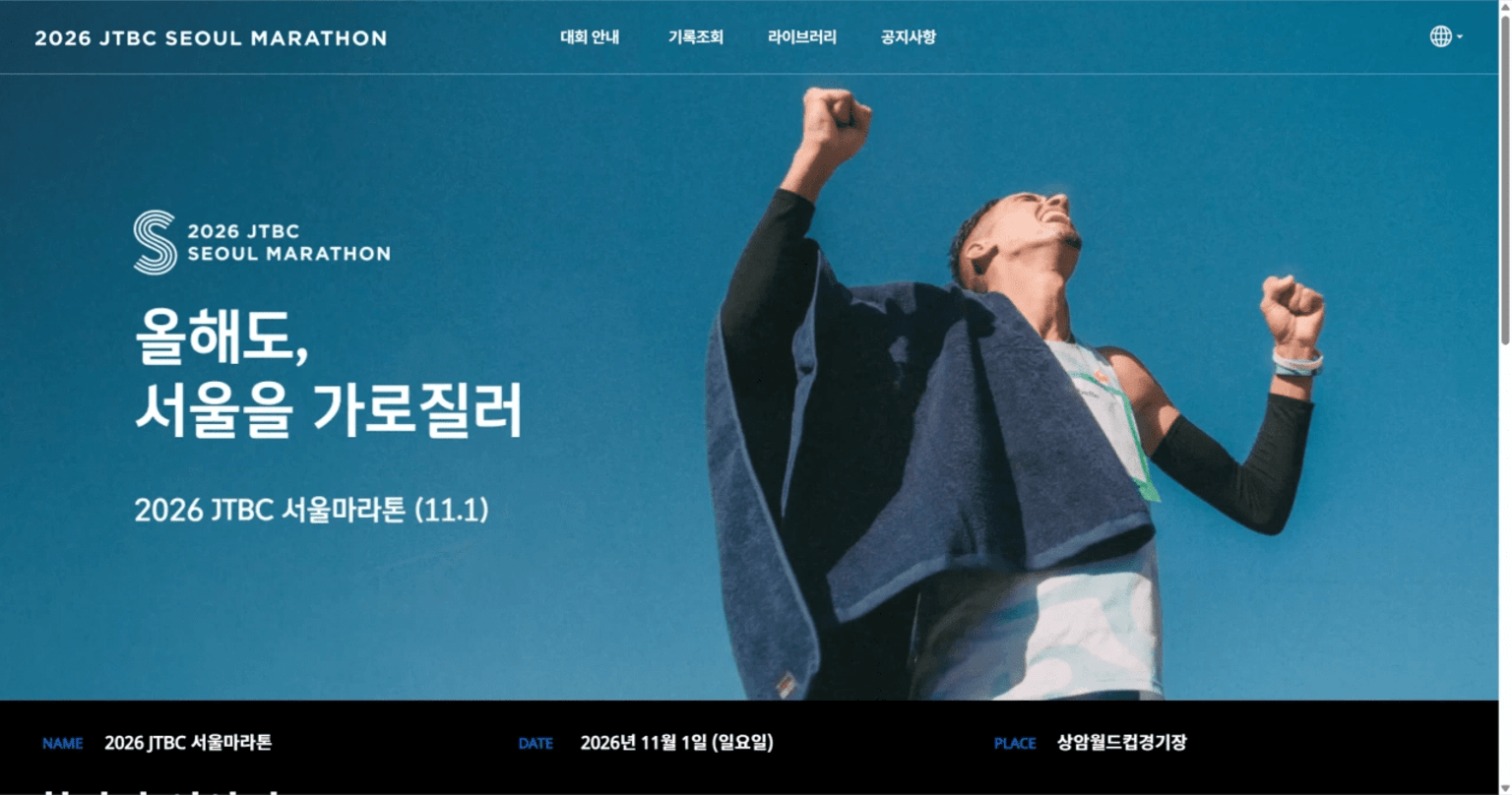
Registration for one of Korea's most coveted autumn races—the 2026 JTBC Seoul Marathon—officially opened today, April 13, at 2 PM KST. If you've spent any time in Korean running circles, you know that registration day for this race is an event in itself. This year, the buzz is louder than usual: a brand-new tiered lottery system based on finishing times, the highest entry fees in the race's history, and mandatory in-person race pack collection at the expo have all sparked heated debate across the running community. Here's everything you need to know.
Why "Jema" Is Such a Big Deal
Runners in Korea affectionately call JTBC Seoul Marathon "Jema" (제마). Held annually in the October–November window in Seoul, it has earned its place as one of the country's most popular full marathons through a combination of factors: the symbolic experience of racing through the heart of the city, extensive television coverage by JTBC, and a reputation for smooth, professional event management.
Competition for spots is fierce. The saying "If you miss Jema, your autumn season is ruined" circulates every year during registration season—and it's only a slight exaggeration. Many runners wrap up their spring racing calendar and immediately set their sights on Jema as their autumn goal. Registration day tends to send an electric current through the entire running community. It's also why runners who can commit the time often pursue a volunteer slot at Jema as a guaranteed way in.
Key Change #1: A Tiered Lottery Based on Finishing Time
The biggest structural change this year is the shift away from a first-come, first-served system to a tiered draw based on your personal best marathon time. Your fastest fingers no longer matter as much as your fastest legs.
The priority tiers work like this:
| Tier | Eligibility | Category |
|---|---|---|
| Tier 1 | Sub-3:00 | Elite & sub-3 runners |
| Tier 2 | Sub-3:30 | Upper-intermediate runners |
| Tier 3 | Sub-4:00 | Intermediate runners |
| Tier 4 | Open (any time) | All runners, including first-timers |
Faster runners get access to the draw first, with remaining spots allocated to each successive tier. The critical detail: this registration is integrated with Kakao Runners Card and the record-tracking service Girokmo-a. If you haven't verified your personal best in advance, you may lose out on a higher tier placement. Even if you don't have a recent time to submit, you can still register—but linking any prior marathon result gives you a meaningful edge in the draw.
A Split Reaction
Faster runners have largely welcomed the change. The old first-come, first-served system meant that a good internet connection could matter more than years of training—so for those who've put in the work, a merit-based system feels fairer.
But the reaction among casual and newer runners has been much more skeptical. The concern is simple: by the time the draw reaches Tier 4, how many spots are realistically left? Runners who've completed a full marathon but don't actively track their records, or those attempting their first full for the very first time, now face a significantly lower probability of getting in.
There's also a notable absence: unlike the Tokyo Marathon and many major international races, JTBC has no consolation draw system that improves your lottery odds if you've missed out in previous years. If you've been applying and losing for multiple years running, this year is no different—it's still down to luck.
Key Change #2: Record-High Entry Fees
The pricing this year has been one of the hottest topics:
- Full Marathon: ₩150,000 (~$110 USD)
- 10K: ₩100,000 (~$73 USD)
Even accounting for general inflation, many runners feel this crosses a line. Comments like "That's what a good pair of running shoes costs" and "For that price, I could enter two regional races" have been common across running forums. The one silver lining that's generating some positive response: complimentary individual photo packages for all finishers. Whether that justifies the price tag is, predictably, a matter of personal opinion. When you factor in gear, travel, and accommodation for out-of-town runners, marathon racing in Korea is becoming a genuinely expensive hobby—a concern that's increasingly being raised in the community.
Key Change #3: Race Pack Collection — Expo Only, No Home Delivery
Starting in 2026, race packs (bib, timing chip, merchandise) will no longer be mailed to participants. Instead, all runners must collect their packs in person at the pre-race EXPO.
For runners based outside the Seoul metropolitan area, this is a significant burden. Threads in running communities have filled up with complaints from regional runners who now need to travel to Seoul the day before and potentially book a hotel—pushing total costs well past ₩300,000. There are some who genuinely welcome the expo experience, noting that the atmosphere and the chance to browse running gear makes it feel more like a true racing weekend. But for the majority of runners outside Seoul, this change raises the barrier to entry considerably.
It's worth noting that Korea saw its first major domestic running expo in March—a pilot by the Dong-A Marathon—and by all accounts it was a hit. There's a broader movement to make Korean road races feel more like the global events they're aspiring to be. In that sense, the direction JTBC is heading makes sense—even if the execution creates real inconveniences for runners who don't live nearby.
2026 JTBC Seoul Marathon: Key Details at a Glance
| Item | Details | Notes |
|---|---|---|
| Registration window | April 13 (Mon) 14:00 – April 15 (Wed) 16:00 KST | Lottery-based, not first-come |
| What you need | Runable app + Kakao Runners Card | Must be set up before applying |
| Entry fee | Full: ₩150,000 / 10K: ₩100,000 | Highest in race history |
| Race pack | No delivery — EXPO pickup only | Expo attendance required |
| Results announced | April 17 (Fri) at 13:00 KST | Payment deadline strictly enforced |
Why Runners Still Show Up
Despite the higher costs, the more complex registration process, and the very real possibility of not getting in, the JTBC Seoul Marathon remains the autumn target race for a huge swath of Korean runners. There's something very real about the fact that people openly grumble about the price and the process—and then apply anyway. The draw of racing through the streets of Seoul, being part of a massive urban race atmosphere, and chasing a personal best in one of the country's most electric settings doesn't fade easily.
Whatever the draw result brings, the conversation won't stop there. Those who get in will be building training plans. Those who miss out will be scouting their next race. Either way, the running season keeps moving forward.
To everyone reading this: we hope you get in. See you at the start line in Sangam on November 1.
Applied for the 2026 JTBC Seoul Marathon? Regardless of the result, it's always worth getting your autumn race calendar sorted early. Browse currently open marathon registrations in Korea.